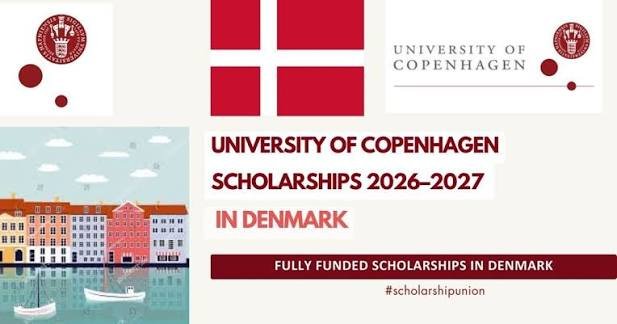
The University of Copenhagen (UCPH) is Denmark’s premier institution for higher education and scientific research. Established in 1479, UCPH is consistently ranked among the top universities in Europe and globally, offering international students exceptional academic programs in life sciences, humanities, social sciences, and natural research.
1. Academic Entry Standards & Language Benchmarks
Admissions at UCPH are selective and require solid academic credentials. Full program requirements can be reviewed on the official University of Copenhagen Admissions Portal:
| Level of Study | Academic Credentials & Qualification Standard | IELTS Academic Benchmark | TOEFL iBT Standard |
|---|---|---|---|
| Undergraduate (Bachelor’s) | High school diploma equivalent to Danish upper secondary level (Quota 2 pathway for non-EU) | Minimum 6.5 overall | Minimum 83 – 90 overall |
| Postgraduate (Master’s) | Recognized Bachelor’s degree (180 ECTS) in a directly relevant discipline | Minimum 6.5 overall | Minimum 83 – 90 overall |
| Doctoral (PhD) | Master’s degree + detailed research plan and department affiliation | Minimum 7.0 overall | Minimum 100 overall |
2. Tuition Fee Structure & Cost of Living in Copenhagen
Higher education in Denmark requires tuition fees for non-EU/EEA international students:
- Humanities & Social Sciences: €10,000 – €12,000 / academic year.
- STEM & Natural Sciences: €13,000 – €17,000 / academic year.
- Danish Government Scholarships: Highly competitive tuition waivers provided to select non-EU Master’s candidates.
- Estimated Cost of Living in Copenhagen: €1,000 – €1,400 / month (housing, food, insurance, and transit).
3. Step-by-Step International Application Roadmap
Step 1: Check Deadlines → Master’s application portal opens November 15 and closes January 15; Bachelor’s Quota 2 deadline is March 15.
Step 2: Submit Digital Application → Apply through Denmark’s national portal Optagelse.dk (Bachelor’s) or the UCPH Master’s Application Portal.
Step 3: Document Verification → Upload authenticated transcripts, syllabi, and official English test results.
Step 4: Denmark Residence Permit → Apply for a student residence permit via the official SIRI Portal upon paying tuition fees.
4. Post-Study Work Permits & Career Prospects in Denmark
Denmark offers strong economic opportunities and post-study transition permits for international graduates:
- 3-Year Post-Study Work Permit: International graduates in Denmark can receive a 3-year job-seeker residence permit following graduation.
- Part-Time Work Allowance: Students are legally entitled to work up to 20 hours per week during terms and full-time in June, July, and August.
About the Author