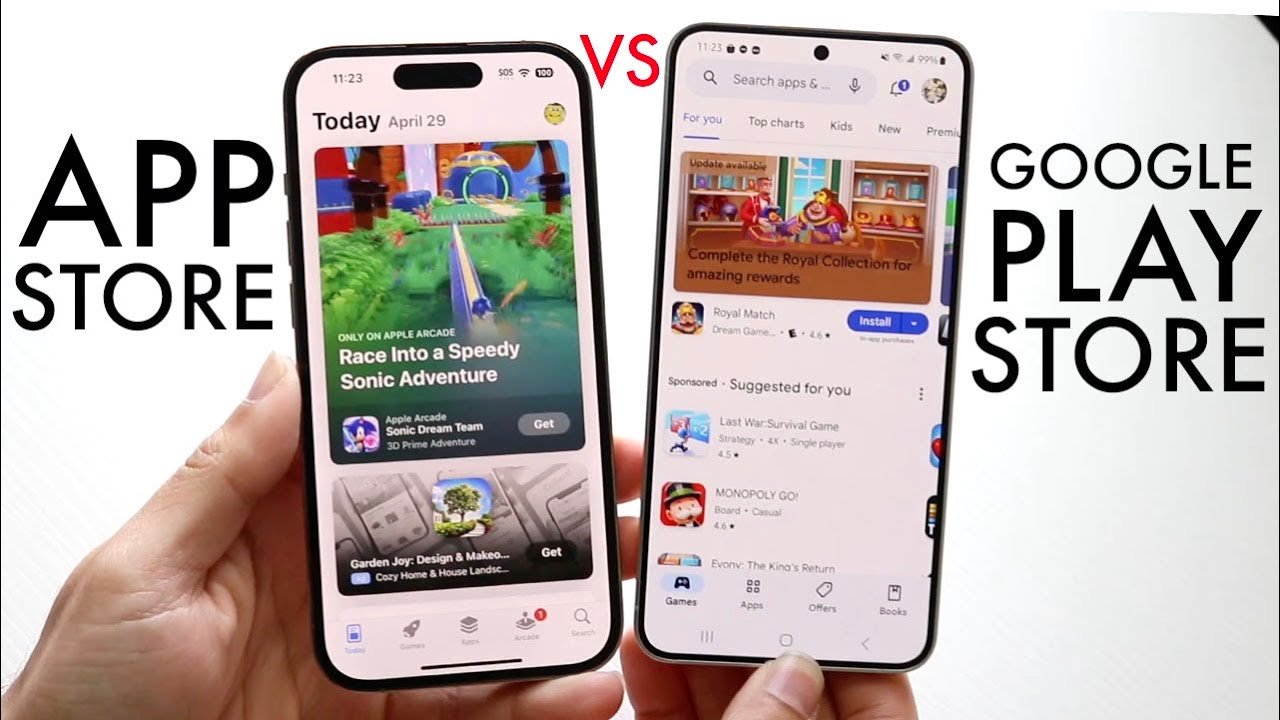
Monetizing mobile applications represents one of the most profitable verticals in the digital economy. As global app usage expands, developers and publishers face a critical strategic decision when aligning their software with mobile storefronts: Apple App Store vs. Google Play Store.
This guide analyzes platform revenue dynamics, evaluates key monetization models, and examines leading applications that generate massive revenue through in-app advertising.
1. Platform Revenue Comparison: App Store vs. Google Play Store
While Google Play commands the majority of global installations, the Apple App Store continues to capture the highest share of direct consumer spending.
- Apple App Store (iOS): Accounts for roughly 60% to 65% of global app store spending. The iOS user demographic exhibits higher average purchasing power, making the platform ideal for paid subscriptions and premium in-app purchases.
- Google Play Store (Android): Represents over 75% of total worldwide app downloads. Driven by high volume in emerging markets, Android is the premier marketplace for ad-supported models and high-traffic freemium applications.
Marketplace Metrics Summary
| Metric | Apple App Store (iOS) | Google Play Store (Android) |
|---|---|---|
| Global Download Share | ~25% | ~75% |
| Consumer Spend Share | ~60% – 65% | ~35% – 40% |
| Primary Revenue Drivers | Subscriptions & In-App Purchases | In-App Advertising & Freemium Models |
| Average Revenue Per User (ARPU) | Significantly Higher | Volume-Driven |
2. Core App Monetization Frameworks
- In-App Advertising (IAA): Displaying banners, interstitials, and rewarded video ads to monetize free users.
- In-App Purchases (IAP) & Subscriptions: Charging recurring fees or digital goods for premium features and content.
- Hybrid Monetization: Combining free ad-supported tiers with paid subscription upgrades to maximize overall ARPU.
3. Top Apps Generating High In-App Advertising Revenue
Applications leveraging high daily active user (DAU) engagement generate billions annually using rewarded ads, native feeds, and video ad placements:
- TikTok: Dominates short-form video advertising alongside integrated social commerce and user tipping.
- Meta Ecosystem (Instagram & Facebook): The benchmark for mobile ad revenue, utilizing targeted native feed and story ad formats.
- YouTube Mobile: Combines pre-roll and mid-roll programmatic ads with subscription upsells (YouTube Premium).
- Duolingo: Uses a hybrid model, combining non-intrusive ads on its free tier with premium subscription options.
- Casual & Hyper-Casual Games (e.g., Subway Surfers, Candy Crush): Maximize user engagement via rewarded video ads (offering extra lives or in-game items in exchange for watching an ad).
4. Strategic Takeaway for Publishers
Official Sources & References
- Sensor Tower Mobile Insights: Global mobile app spend and marketplace distribution data. https://sensortower.com
- Business of Apps Industry Reports: In-app advertising benchmarks and mobile platform analytics. https://www.businessofapps.com
- Google AdMob Solutions: Developer frameworks for in-app ad monetization. https://admob.google.com
About the Author