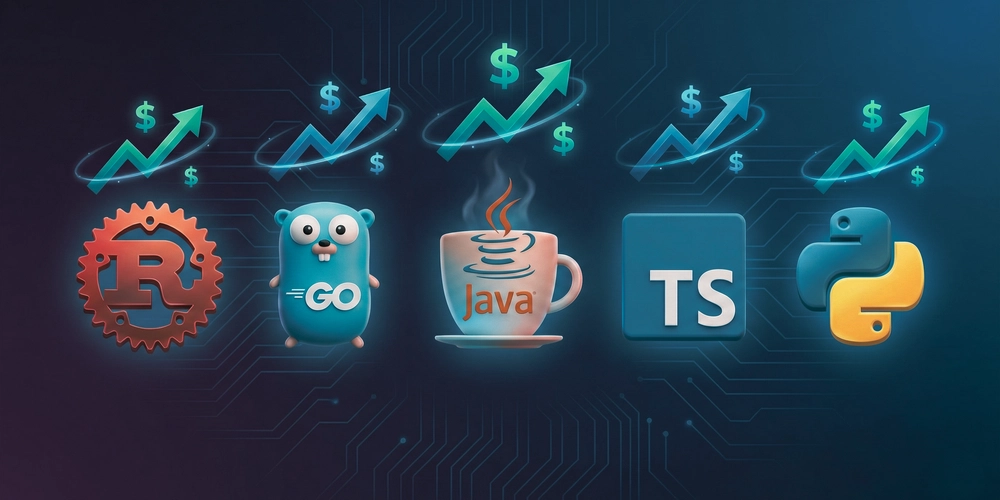
In the rapidly evolving landscape of software engineering, generative AI, and cloud architecture, choosing the right programming language is essential for long-term career growth. While trendy frameworks come and go, a core group of foundational languages continues to adapt, thrive, and dominate enterprise technology stacks in 2026.
Whether you are an aspiring developer selecting your first language or a seasoned engineer expanding your skill set, this guide highlights the most future-proof programming languages that guarantee strong job demand and industry longevity.
1. AI & Data Analytics Leaders
Python
- Primary Use Cases: Artificial intelligence, machine learning pipelines, backend development, and scientific computing.
- Why It Thrives: Python remains the undisputed leader in AI development. Its extensive ecosystem—including PyTorch, TensorFlow, and FastAPI—makes it indispensable for building Large Language Models (LLMs) and automated workflows.
SQL
- Primary Use Cases: Database querying, data engineering, and business intelligence.
- Why It Thrives: Nearly every web framework and enterprise system relies on SQL for relational data management. It connects seamless analytics scripts with production databases across all industries.
2. Web & Cloud Architecture Champions
JavaScript & TypeScript
- Primary Use Cases: Interactive frontend applications, full-stack web development, and server-side services (Node.js).
- Why They Thrive: JavaScript powers web interactivity, while TypeScript adds static typing to improve code maintainability in large-scale enterprise applications. Together, they form the bedrock of web architecture.
Go (Golang)
- Primary Use Cases: Cloud-native infrastructure, microservices, DevOps tooling, and distributed systems.
- Why It Thrives: Created by Google, Go offers lightweight concurrency and rapid execution, making it the top choice for container orchestration (Docker, Kubernetes) and scalable cloud backends.
3. Performance & Systems Programming
Rust
- Primary Use Cases: Systems programming, cybersecurity tools, WebAssembly, and high-performance embedded systems.
- Why It Thrives: Rust delivers C-level performance while enforcing compile-time memory safety guarantees. It continues to be adopted by major enterprise players for building secure, low-level infrastructure.
4. Language Overview & Career Matrix
| Language | Target Domain | Primary Demand Driver | Career Outlook |
|---|---|---|---|
| Python | AI, Data Science & Machine Learning | Generative AI & Automation | High Growth & Premium Salary |
| TypeScript | Enterprise Web & Full-Stack Apps | Scalable Frontend Architectures | High & Stable Demand |
| Go (Golang) | Cloud Infrastructure & DevOps | Cloud-Native Systems & APIs | High Demand & Senior Roles |
| Rust | Systems & Security Engineering | Memory Safety & Performance | High Demand for Specialists |
| SQL | Data Architecture & Backend | Core Enterprise Data Storage | Universal Requirement |
5. Strategic Recommendation for Developers
- For Beginners: Start with Python or JavaScript to master programming fundamentals and gain fast entry into web development or data analytics.
- For Enterprise Roles: Transition into TypeScript or Java/C# for structured, large-scale application design.
- For Cloud & Infrastructure: Learn Go and Rust to build high-concurrency cloud systems and secure, performance-critical backends.
Official Sources & References
- Stack Overflow Developer Insights: Annual survey metrics on language usage and developer adoption. https://survey.stackoverflow.co
- TIOBE Programming Community Index: Global popularity rankings and index trends for programming languages. https://www.tiobe.com/tiobe-index
- GitHub State of the Octoverse: Analysis of repository growth, contributor activity, and language trends. https://octoverse.github.com
About the Author